When this service helps
Backup power design starts with understanding which loads need to operate when normal power is unavailable. Life-safety systems, building operations, and owner-selected standby loads can have different requirements. A careful scope distinguishes those needs and coordinates them with the building's existing electrical and mechanical systems.
What the engineering scope addresses
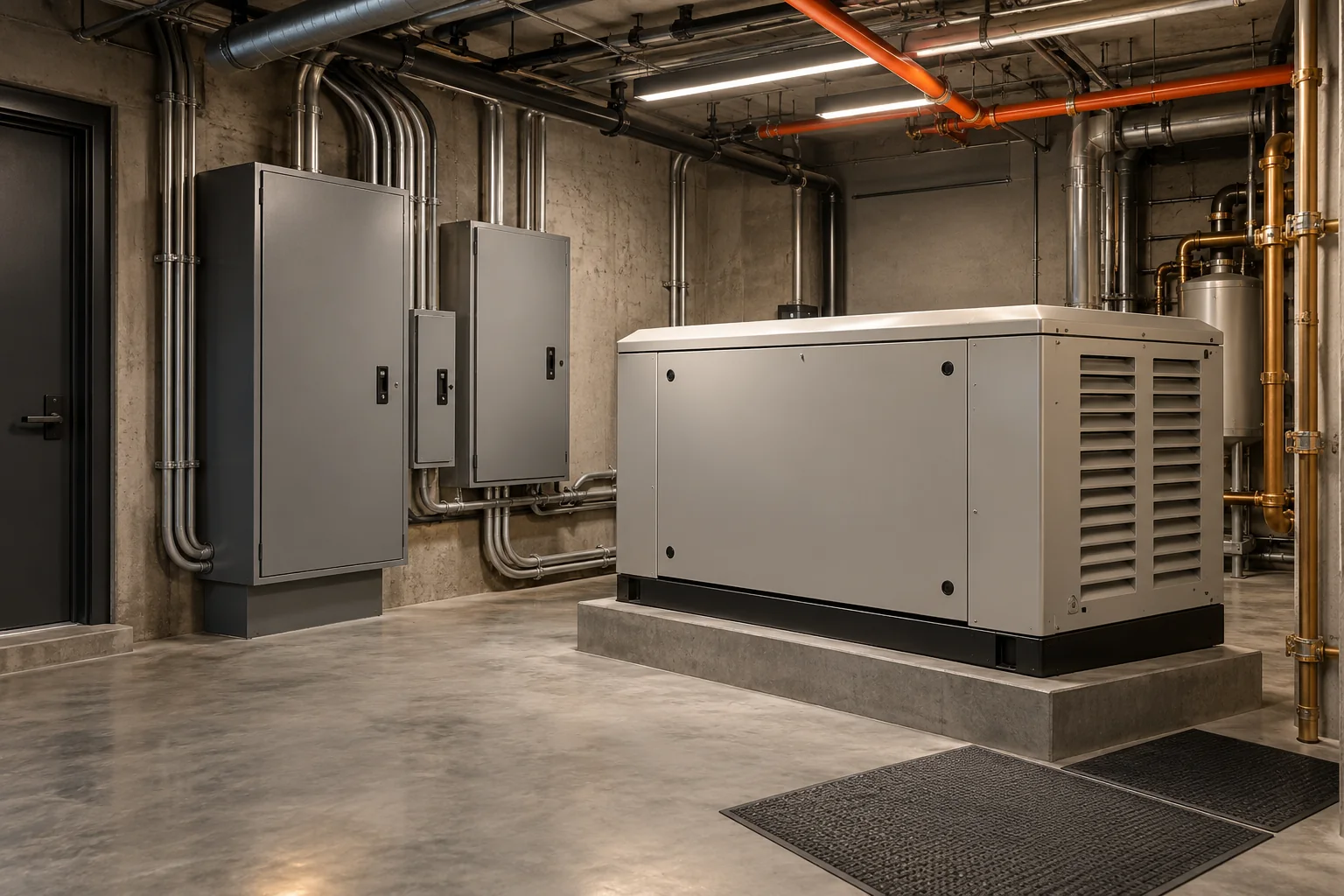
Engineering can address generators, transfer equipment, UPS systems, emergency lighting, load distribution, and connections between normal and alternate power sources. System arrangement, grounding, protective-device coordination, and equipment space are considered as appropriate. Generator projects also require coordination with other disciplines for fuel, ventilation, exhaust, acoustics, and structural conditions.
Planning the next step
Existing buildings may have limited space and significant operational constraints. A design should identify the relevant interfaces and the responsibilities of specialist vendors, contractors, and the wider design team. Testing, commissioning, agency coordination, and construction observation can be defined separately. Equipment selection should follow the building's needs and the applicable project requirements.
Potential deliverables
- Generator, UPS, and transfer-switch design
- Emergency lighting and power-distribution coordination
- Load, grounding, and system-separation review
The proposal confirms the exact deliverables and any site visits, follow-up review, filing support, or construction services included.
What to prepare
- List of life-safety, essential, and desired standby loads
- Existing normal and emergency power diagrams
- Generator, UPS, and transfer-equipment records
- Available space and building operational requirements
Share what is available and identify records that are missing. We can help define the initial engineering scope around the information and access your project has.
Related guidance
Can Your NYC Building Support More Electrical Load?
Our resource library includes practical checklists and links to official NYC documents.